
The Ecclesia Sophiana is a mystical and esoteric church in the Gnostic Christian tradition. It welcomes all views and beliefs knowing that all roads lead to Rome – or in this case, to God, divinity, enlightenment or whatever one calls the spiritual ultimate.
In an age where knowledge is paramount and the gain of it is the focus of scientists and academics of all kinds, it is strange that Gnosis or knowledge is frequently feared and usually condemned as heretical.
It’s common to fear the unknown. Wouldn’t it be more courageous and informative to research and pursue the possible benefits the unknown might provide? Facing the geographical unknown is what makes people explore new lands, cultures and worlds. Facing the intellectual / spiritual unknown is what makes people explore new ideas and beliefs.
Such investigation would change the unknown to the known / knowledge / Gnosis.
We aim to know ourselves. Not because we are intrinsically worth knowing but because we have the spark of divinity within and our search is to discover and build up this spark. This is why the celebrant says, ‘Be what you see, receive what you are’ when offering the bread and wine; become the body and blood of Yeshua / Jesus; receive it as you are already the divine. The receiver responds appropriately, ‘I see and I believe.’
This understanding of Christianity has its origins in the earliest of times before and after the death and resurrection of Yeshua. For example, Yeshua described both himself as the light of the world and also the disciples as the light of the world.1 This idea continues within the epistles: You are all the children of the light.2 and in alternate gospels such as the Gospel of Thomas: There is light existing within a person of light and it enlightens the whole world.3
Condemned as heresy by the developing ‘orthodox’ church, such ideas quickly went underground resurfacing at irregular intervals. It was always a quieter practice aiming to reach knowledge of God through esoteric and / or mystical methods. Each person aims to have their own relationship with the divine without the interface of others. There is no barrier to the divine here, no need for priests, bishops, hierarchies…
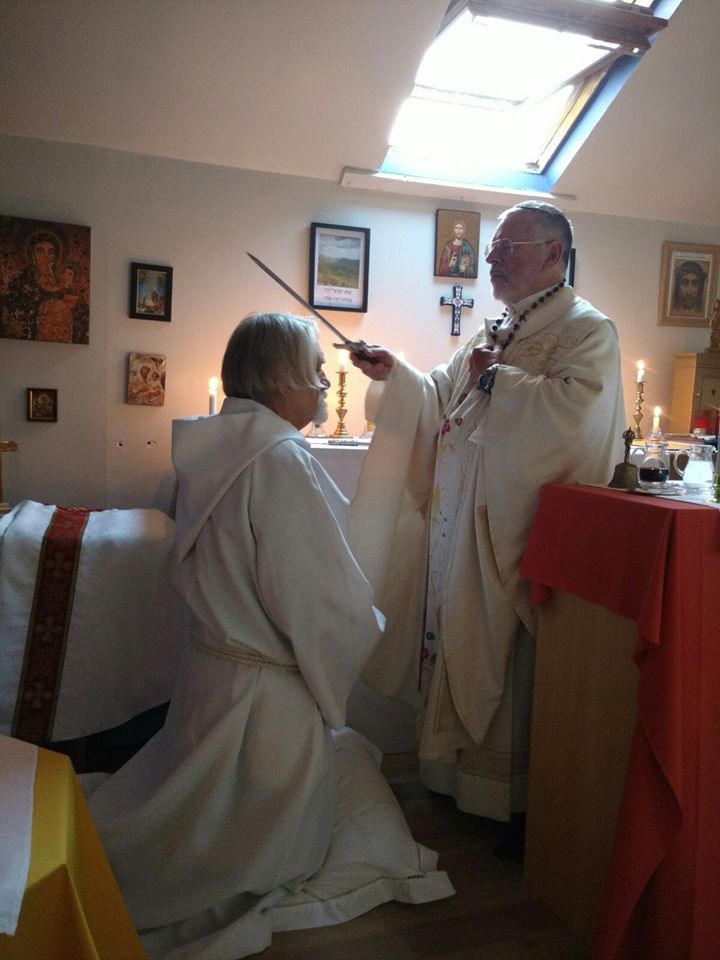
However, as the image shows, Bishop Lewis Keizer of the Home Temple is seen consecrating Bishop Vernon Marshall of the Ecclesia Sophiana. And I am a deacon being part way through the course to deepen one’s understanding of Gnosticism and mystical practices.
This is a world of many paradoxes…
……………………………………………
1 John 8:12 and Matthew 5:14
2 1 Thessalonians 5:5
3 Gospel of Thomas, section 24
 spirit unlimited